Sunday, October 13, 2019

Who do others say you are

Louis Vuitton, Chanel, Hermès and Dior were among the top five brands listed under the “sneaker” hashtag on popular Chinese shopping app RED. The only other brand among the top five was Nike. The luxury market in China is still thriving despite high prices and issues with counterfeiting. LVMH's fashion and leather goods sales growth was up 19% year on year, contributes 59% of operating earnings. No luxury brand , except for Ferrari, can rival that rise. Its stock is trading at a price to forward earnings multiple of 26 times, near 10-year highs.


Research shows that consumers associate luxury goods with both accomplishment and snobbery.

I am not saying that money and things are not wonderful or that they are intrinsically bad. I am saying that we need to be aware of the ways they can affect us. After the money come the things - the stuff we buy because we just have to have it, the stuff we buy because everyone else has one, the stuff we buy because we are having a bad day, and then stuff we buy because we feel like rewarding ourselves.

Money and possessions have their appeal and rapidly advancing careers can fuel our egos, but character is what will see you through good times and bad.

Whether or not you recall the names of the two wealthiest people in the world - or the last few winners of the Academy Awards or Nobel Prizes - I'll bet you can remember the names of two favourite teachers or friends who stood by you.

Take ten seconds to think of the people who have helped you become who you are, those who cared about you, and wanted what was best for you in life. Who has helped you become who you are?

And reflect on this: Who will think of you in the same way?

We remember the ones who cared. And we can become one of those people who are held in others' hearts and memories long after we have passed from this earth.


I find it curious how the people that have no respect for your feelings are the same people who demand respect from you. Respect other people regardless of the level they are at...or the level you are at. Respecting someone indicate the quality of your personality.

Each day doesn't seem to make a huge difference, but before you know it, those days have  added up to weeks, months and even years or decades you've spent with people. Can you look back and find at least one place you encourage someone? Did you teach her? Did you empower her and see her get stronger as a result? Are the people in your team better because of their time with you? That's a simple and powerful test of your leadership, and it's all about the health of your relationships.

Carve your name on hearts, not tombstone. A legacy is etched into the minds of others and the stories they share about you.


Sunday, October 6, 2019

How do you lead the unleadable?

Sweeping 10 Emmy awards including Outstanding Limited Series, “Chernobyl” became one of 2019’s most celebrated shows. The five-part HBO historical drama depicts the Soviet Union’s 1986 nuclear disaster killing an estimated 4,000 to 90,000 victims and leaving areas of Eastern Europe heavily effected by radiation to this day.

It is a story of incompetence, delusion and arrogance. 

Are there areas of poor performance that you have tolerated? Have you ever found yourself reluctant to hold an employee accountable because you were worried he'd leave? Or let a performance issue fester for fear of not being liked?

The problem is when you let expectations slide, when you tolerate poor performance, it reduces your credibility. High performers hate nothing more than watching their poor-performing teammates drag down results. Tolerating poor performance cretes a morale death spiral.

If you have a struggling performer on your team, do all you can to help. If it's truly a case that you haven't done enough to support, develop, encourage, build confidence in, empower or recognize an employee - you have more work to do. 

How much of a person can a leader change?

A lot of people in the workplace delude themselves about their achievements, status and their contributions. They have an elevated opinion of their professional skills. That's not necessarily a bad thing but their delusions become a serious liability when they need to change.

For some people, telling them to change their behavior doesn't make a dent; they assume that everyone else is confused.

If you have invested in the employee and it's still not working, it's time to face the facts: this job may not be the right fit for the employee. You don't need to feel guilty.

Perhaps you hired her. Perhaps you even convinced your boss that she was "the one". If you've done everything you can to make it work, but it isn't going well, it's far better to admit you were wrong, learn from your experience, and move on. Don't magnify one poor decision with another.

You need to do what's right for the greater good of the company, the team and the person.


Sunday, September 29, 2019

Behind every great team is a great culture


An Apple-Disney merger.  Disney CEO Bob Iger, in the excerpt from his forthcoming memoir “The Ride of a Lifetime: Lessons From 15 Years as CEO of the Walt Disney Company”, says he believes Disney and Apple would have merged if Steve Jobs hadn’t died in 2011.

What a world that would be! But, alas, we’re in this world.

The cultural element in M&As' integration process has been identified as one of the key issues that may help explain the failure of many mergers and acquisitions. In short, culture isn't just one thing. It's everything.

It's why Apple is famous for its maxim, "Culture beats strategy." You have to have the right strategy, of course, but it is your culture that will determine whether your strategy is successful.


Think about your work environment for a moment. What words come to mind? Words like fun, freedom, creative, energized? Or bureaucratic, stifling, drab, pressured?

Our most important job as a leader is to create a culture. We are creating culture every moment of every day by what we think, say and do. Everything we do - or don't do - is examined in all quarters. People are going to examine everything about us. We, as leaders set the tone and decide what the team values and stands for, but it's important to note that our culture is brought to life and created by everyone on our team.

I wish I had been a leader then that I am now but, unfortunately, I wasn't. I didn't know how important culture was to the success of a team. I now know that building a great team begins with creating a great culture. I changed. I was a hard driver and all about the results. These days I make culture my focus and we work to become a great team instead of just a bunch of individuals who wanted to meet our goals.

You may not have the most talented team, but you can work to create the best team culture. There's a lot you can't control, but you can control how much time, energy and care you invest in your culture. I'm not going to lie and say that talent isn't important to be a successful team. But I've seen many teams with a lot of talent and a bad culture perform badly. Too many teams focus on the fruit of the tree - the results, the numbers. They ignore the root - their culture, people and relationships. They think it's the numbers that matter most.

What they don't realize is that it's not the numbers that drive the culture; it's the culture that drive the numbers.


Research from Harvard University supports the idea that the emotions you feel are contagious and affect the people around you. Your team is likely to catch your bad mood and on the flip side, they will catch your good mood as well. As a team member, your attitude, energy and leadership are contagious, and has a big impact on your culture and team.

My team today is connected by a common culture. There is a tremendous amount of sacrifice from this group of individuals. The results we continuously achieve would never had been possible without the dedication of the team, belief instilled by leadership and the connection to common culture. The power of the team comes from how committed they are to one another, and from how unified they are with the common goal.


I feel more like a team member than a leader because the team members lead each other.


Saturday, September 14, 2019

The key to success is relationships

60,000 people packed into an Olympic stadium for jack Ma's retirement party. China's richest man, Alibaba's cofounder donned a wig and leather jacket for the occasion which was also his 55th birthday and the Chinese e-commerce giant's 20th anniversary.

Jack Ma once said at a forum organized by the De La Salle University that despite knowing "very little about technology" the key to his billion-dollar success is knowing how to work and deal with people. “If you want to be successful, you should have great EQ (emotional quotient). Because you’d know how to work with people."


How are you relating? How are your relationships?


Life is a journey and along the way, you will meet many people. Some of them you will help, assist, advise. Others will help, assist and advise you. It has been my experience that when you think you are there to help someone else, chances are they are really there to help you. Our students make the best teachers.


Without the help of others, you will never make this journey. It is a funny thing I have observed about life - mistakes are almost always and inevitably one's own responsibility, but one's success, triumphs and worthwhile achievements are rarely accomplished without the help of others.


Empathy lets us better understand the people we are trying to serve or work with and gives us perspectives and insight that can drive greater and more effective actions. Some of us are born with an overwhelming degree of empathy, while others are callous or even blind to the perspectives of others. The rest of us fall somehwere in between. But empathy is more than just a natural talent; it can also be a process, a learned skill, developed and applied when and where needed.


You see, people are very willing to go the extra mile for someone they trust but they won't even consider doing so for someone they don't trust. When the trust level is high, people feel confident that the situation is going to be win-win. On the other hand, if there is no trust, people automatically assume the situation is going to be win-lose, that they will simply be taken advantage of. 


Trust, not money, is the currency of business and life. Trust can accelerate and mistrust can destroy any business, team or relationship. No matter what your role is, trust affects your influence and success.


When the trust level is high, people see very clearly that working hard to help their leader pursue his or her objective (ie extraordinary results) is also the vigorous pursuit of their own. In  other words, they know the leader isn't going to take advantage of them and is going to reciprocate in some meaningful way. As a result, they can become highly motivated to direct their best efforts toward this pursuit. Without this connection, there is absolutely no reason for them to get excited about helping their leader achieve extraordinary results, so they don't.


While it may sound trivial, the most important thing you do to demonstrate you care is to ask for their thoughts and opinions, listen to what they have to say, and then take whatever constructive action is required. You see, leaders who achieve extraordinary results are not arrogant or superficial, they don't play games, and they are not powermongers. Instead, they are real, and that's how they come across to people.


At the end of the day, it is not who you know, but who knows you that counts.


Sunday, September 1, 2019

Your career depends on the image you're projecting

Golden Helmet. That was what Donald Trump's old hair was called until his brand new, slick-back 'do. At the recent G7 meeting, Boris Johnson, who is famous for his unattractive and badly-styled hairdo, revealed a new hairdo which looked so much like Trump’s infamous comb-over - and the internet went unsurprisingly ballistic.

Let's face it, work simply isn't what it used to be. No matter how good your business credentials and solid your achievements, they're only the minimum requirement. 


Like it or not, perception is everything in the business world. How we look, sound and behave, how we handle ourselves and others, are more important in business today than how capable or clever we are. Don't get me wrong, God-given talent and proper training are valuable variables for success. Talent alone may tee up high-level performance to get you in the door, but it is not sufficient. Character will keep you in the room. 

According to Harvey Coleman in his book Empowering Yourself, The Organizational Game Revealed, although Performance is the entry ticket to the party, Image is three times more important as a driver for career success. Successful impression management can generate a number of important personal and organizational benefits, like career advancement, client satisfaction, better work relationships and group cohesiveness.


If you have been effective, reliable and knowledgeable thus far in your career, are these values enough to gain new chances of leadership and progression? If not, what new "brand values" do you need to adopt: to look, sound, behave and project?


In my experience, the key to successfully projecting  a professional image is to always be true to your authentic self. If projecting an image feels forced and phony, chances are it will come across as forced and phony.


Case in point: to demonstrate that you care about the person, one would be genuinely focused on what that person is saying, not just pausing to be polite. This is not something you can fake - at least not consistently. I see examples of passive listening every day; it has become so common with each passing year. It has become routine to walk into meetings and see half dozen attendees punching the keys of their laptops. Many of them could be taking notes, but from my perspective they could be clearing emails or playing computer games. Similarly for the person you're talking with to zone out and start typing on the mobile phone in the midst of a conversation.


Everyone can project a more positive image.


Everyone can develop a winning brand.


Everyone can develop a professional presence.


However, this image must be consistent with who you really are as a human being. 


Sunday, August 25, 2019

Your team is expected to deliver - BIG.

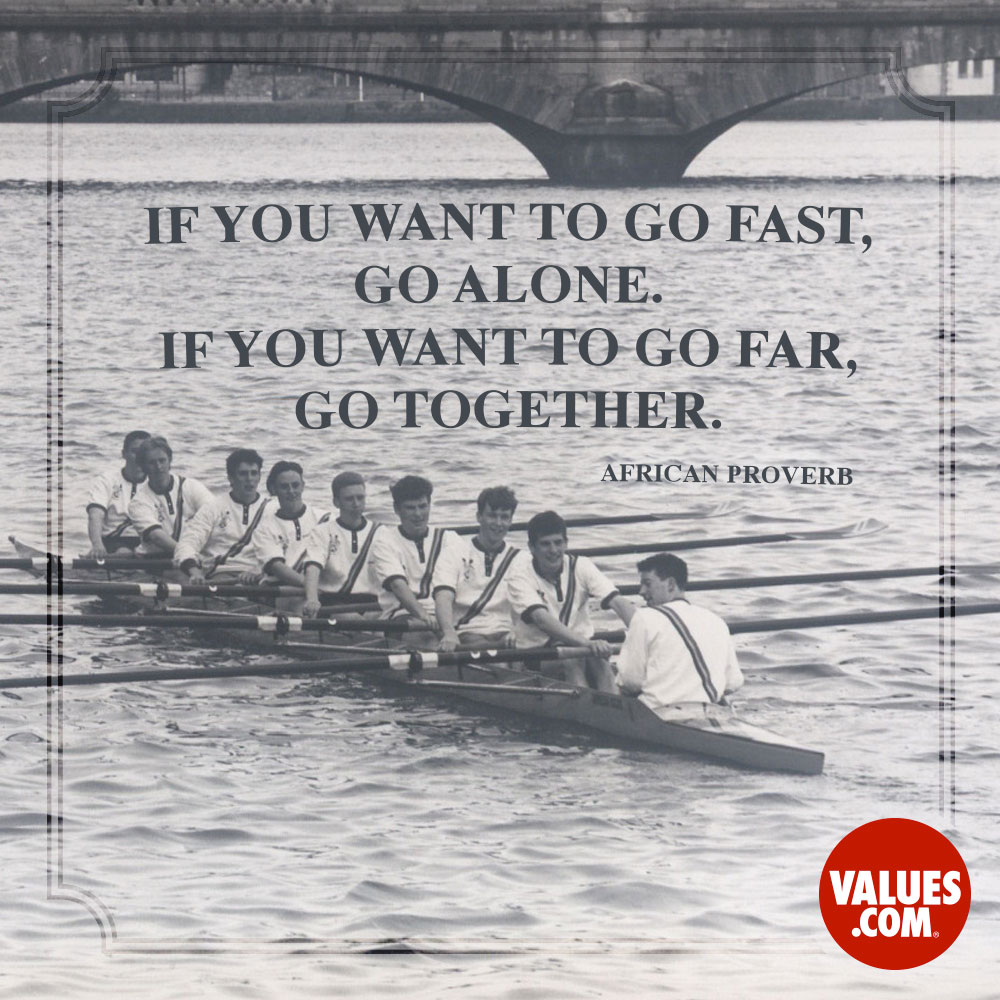
Avengers: Endgame has officially dethroned Avatar to become the biggest movie of all time. The Avengers -  Iron Man, Captain America, Captain Marvel, Thor, Black Widow, Hulk and  Ant-Man is the world's favourite super hero team. The Avengers taught us to accept one another in a team regardless of our different background and personalities and to set aside our differences and work together. The Avengers showed us that it is normal to have conflict between each other. We don't always see eye-to-eye because we’re only human and arguments will happen. But the important thing is to know when to let go of our pride, be the bigger person, move on and focus on a far greater purpose.

A few years ago, a series of business school student and kindergartner groups took part in a competition to build the tallest possible structure using pieces of uncooked spaghetti, transparent tape, string and a marshmallow. The contest had only one rule: the marshmallow had to end up on top. If you bet on the business school students because they possess the intelligence, skills and experience to do a superior job, your bet would be wrong. In dozens of trials, kindergartners won, proving again and again that a group of ordinary people can create a performance far beyond the sum of their parts.

Organizations keep throwing talented and intelligent people together, thinking that somehow talent and intelligent teaming will occur. It's painful to watch. Some teams have top talent and leadership and still lose. Others don't have the best talent and leadership, yet win.

In examining success stories of team success, we see a list that include trust, collaboration, respect, strategy, empowerment, communication. It's a list in countless books and organizations around the world. There's no surprise here: these qualities are necessary for a team to succeed.

But there's more. In nearly every success stories, there's a pattern - a way a team approaches their objectives and team members interact with each other. It does not require doing more; it is about being more. 

Here's a big question: do your teammates care enough about achieving success to care about each other?

The truth is, respect alone is not enough. It is merely a first step to being an effective team. To do meaningful work together requires that team members be meaningful in their interactions with one another. But caring is hard work that not everyone is up for. Caring requires that all of us listen more, accept where people are at in their thinking instead of criticizing them, and defend them even when they are not in the room with us. Not everyone has the heart to do these things.

Doing business together successfully requires connecting as humans effectively. A team can't make an epic impact if only a portion of the team chooses to partner those with whom they interact the most. When a team lacks the commitment to a human imperative, the business imperative becomes just one more thing to do on a long list of objectives.

When I ask people inside highly successful groups to describe their relationship with one another, they all tend to choose the same word. This word is not friends or team or any other plausible term. The word they use is family. What's more, they tend to describe the feeling of those relationships in the same way.

My team environment is like a greenhouse. In some greenhouses, the leader plays the role of the plant that every other plant aspires to. But that's not me. My  job is to architect the greenhouse by being painstaking in the hiring process, having low tolerance for bad apple behaviour, making sure everyone has a voice, seeking simple ways to serve the group and embracing fun. This obvious one is still worth mentioning, because laughter is not just laughter; it's the most fundamental sign of safety and connection.

My team deliver high performance and as the do so the members of the team become better people and stronger together. When they interact with one another, there's a striking camaraderie that continues to this day. Trust, laughter and lots of listening are apparent. As well, immediately noticeable are two things they don't do. They don't talk about themselves. And no single person acts as if the are bigger that the team. As a result, I find myself wishing I could spend more time with them. They cared. They knew they are better together. And it shows. 

For a team to succeed, leaders do not need to be superhuman. Nor do the members of the team need to qualify as exclusive specimens of humanity. These are people being at their best, bringing out the best in others, and partnering across the business to deliver shared objectives. And this is how we do big things. 

Oh, yes, here’s another thing I learned from the Avengers. ONE is better than one. One team is better than one person.

Saturday, August 17, 2019

Leaders who inspire get great results

A new record: As of June 1, 33 of the companies on the ranking of highest-grossing firms is led by female CEOs for the first time ever. This is a considerable jump from last year’s total of 24. Seven of the world's most powerful women in business are at General Motors, Hershey, Oracle, Kohl’s, Lockheed Martin, Yum China and IBM, to name a few. 
When it comes to being a female leader, Marriott International Global Sales leader knows a thing or two. "Inspiration, not intimidation," she recently said. 
Who has inspired you? Maybe your parents, a friend, a teacher? What did they do that had such an impact on you?
What inspires people? Caring. 
What does this mean for those of us who are trying to become better leaders in the workplace? Do we have to tell our employees that we love them? Must we line them up and hug them at the start of each day? No, that's probably going a bit too far - it is vital, however, that we create a supportive environment. Leaders show that they care about that their team members do and who they are. Simply put, a boss says "go," a leader says "Let's go."
It turns out that the two most powerful words in the English Language are, "Well done." Not every productive employee is appreciated. But every appreciated employee is productive. 
Looking back further, I remember another critical piece of advise. You don't get the best out of people by hitting them with an iron rod. You do so by gaining their respect, and convincing them that they are capable of improving their performance. I cannot think of any leader who succeeded for any length of time by presiding over a reign of terror. 
I always got more out of people by praising them than by scorning them with criticism. Sales people, like all human beings, are plagued by a range of emotions that run all the way from profound insecurity to massive over-confidence. People perform best when they know they have earned the trust of their leaders. When I was younger, I was more inclined to be severe. I cringe when I think back to those moments. 
Many people cannot stop long enough to listen - especially when they had become successful and all the people around them are being obsequious and pretending to hang on their every word. They launch into monologues as if suddenly they know everything. Putting these megalomaniacs to one side, it always pays to listen to others. Unless you understand people, it's very difficult to motivate them.
People buy into the leader before they buy into the vision. Many people who approached the area of vision in leadership have it backwards. They believe that if the cause is good enough, people will automatically buy in and follow. But that's not how leadership works. People don't follow worthy causes; they follow worthy leaders with a cause they can believe in. They buy into the leader first.
Be the leader you wish you had. Be the leader you would follow.